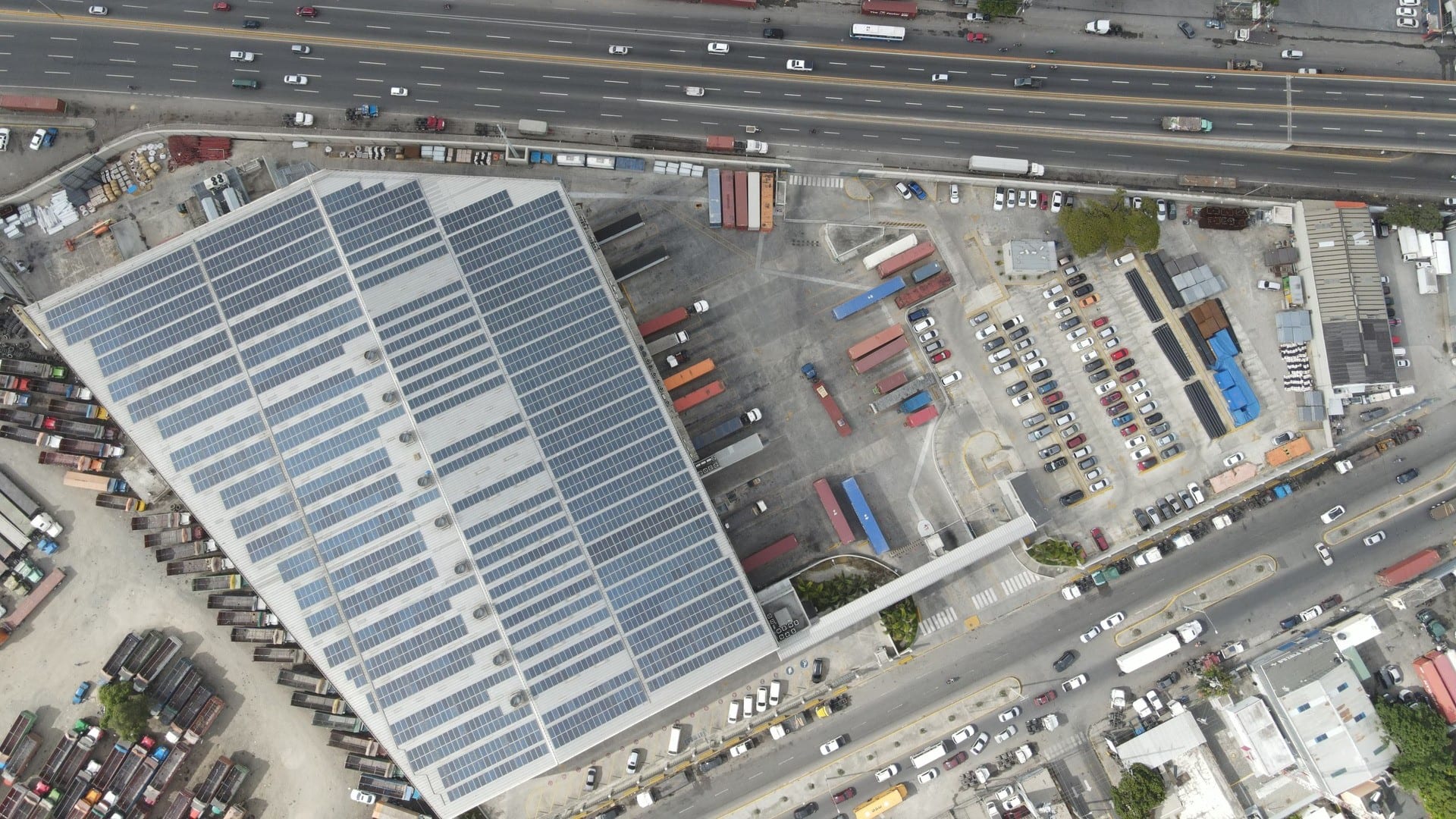
ENVIRONMENTAL COMMITMENT
At Caribetrans, we understand that logistics has a direct impact on the environment. Therefore, we incorporate practices aimed at reducing our environmental footprint and operating more efficiently and responsibly.
ENVIRONMENTAL IMPACT
Clean Energy
Implementation of solar panels across our operational facilities.
Reduction of conventional energy consumption.
Prioritizing renewable sources as part of our operational efficiency.
Efficient Operations
Optimization of routes and logistics processes.
Lower fuel consumption through intelligent planning.
Indirect reduction of emissions in every operation.
Responsible Management
Conscious use of resources in offices and operations.
Preventive fleet maintenance to improve environmental performance.
Strict compliance with local and international regulations.
+3000
SOLAR PANELS
With an infrastructure of over 3000 solar panels, Caribetrans integrates clean energy into its operational facilities.
ZL-HAINA (Headquarters)
ZL-6 DE NOVIEMBRE (Sein Industrial Park)
ENVIRONMENTAL COMMITMENTS
Recycling Program
Recycling of facility waste at ZL-HAINA (cardboard, plastic, wood).
Renewable Energy
Currently active in two locations: ZL-HAINA (1,049.22 kWp) and ZL-6 DE NOVIEMBRE (236.43 kWp).
Environmental Policy
We operate under a formal environmental policy with clear objectives to mitigate our impact.
Sustainable Development Ratings
Our performance is audited and measured by global sustainable development platforms such as EcoVadis, IntegrityNext, and Sedex.
Sustainable Procurement
We maintain formal sustainable purchasing policies.
OUR POLICIES
To contribute to a greener future, we have undertaken the following challenges:
1. Energy
Reducing dependence on traditional sources and lowering CO2 emissions through alternative energy and efficient technologies.
Target: 40% renewable energy in corporate offices by 2025.
Water & Energy Efficiency: Implementation of constant pressure systems for resource optimization.
HVAC Efficiency: 80% high-efficiency air conditioning units by 2026.
2. Waste Management
Waste classification to reduce, reuse, and recycle.
Classification Systems: Dedicated sorting for plastics, wood, cardboard, and paper in corporate offices.
Circular Economy: Donation of functional electronic equipment to educational institutions and communities.
Responsible Disposal: Certified disposal of end-of-life electronics at specialized centers.
Sustainable Dining: 50% biodegradable or reusable materials in employee cafeterias.
Digital Transformation: 100% electronic invoicing to minimize paper consumption.
3. Environment
Concrete actions to protect our immediate surroundings.
Ozone Protection: Total elimination of high-impact R-022 refrigerants.
Coastal Protection: Periodic beach cleaning campaigns in areas near our operations.
Community Engagement: Maintenance and enhancement of public spaces adjacent to our facilities.
4. Internal Culture
Promoting eco-friendly practices in daily activities with the active participation of all collaborators.
Sustainable Mobility: Collective transportation provided for at least 30% of our workforce.
Awareness: Continuous internal campaigns promoting sustainability and environmental responsibility.
We continue strengthening a responsible logistics operation, integrating operational efficiency, energy innovation, and sustainable practices that meet current demands and future challenges.